
Academics
A practitioner who teaches
Academic teaching statements, philosophical and pedagogy positions, and an artist statement for my creative work are all part of my academic identity. I guest lecture, lead events for children and teens with the TRCL nonprofit, and teach regulatory strategy at Northeastern University.
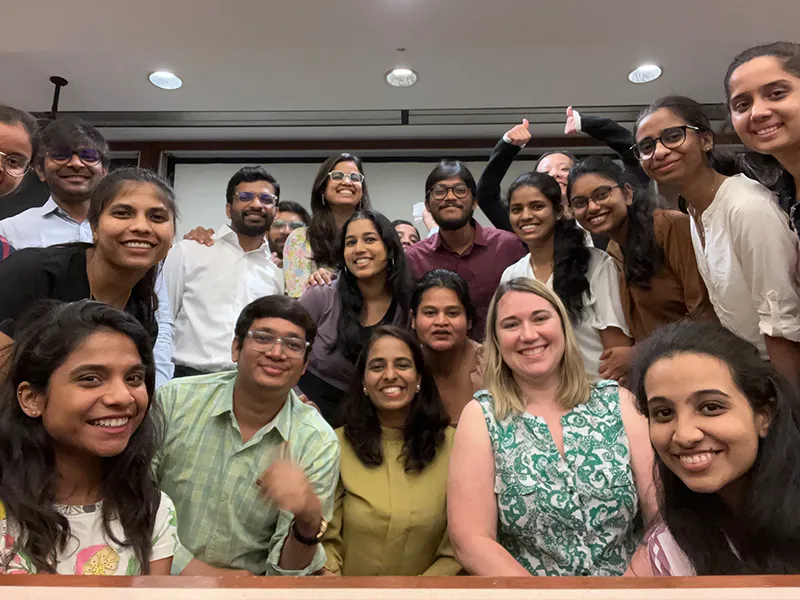
- Adjunct Faculty, Northeastern University
- PhD, Technical Communication and Rhetoric
- More than 60 publications and presentations
Pedagogy
Students learn it by doing it
My classrooms use encoding, decoding, and experiential learning as alternatives to the quiz and the term paper.
-
Encode
Students make the regulated thing themselves. A label, a carton, a submission.
-
Decode
They take a real one apart, and find that one term means different things to an investor, a regulator, and a patient.
-
Do it for real
The deadline, the tools, and the argument are the ones the job will bring. You learn by doing.
-
Bring the history in
Antique medical and computing artifacts put the past in students’ hands, and connect them with what innovation still needs.
In the classroom
Techniques I teach with
Some of the methods I use in place of a lecture, shown as they happen.
-
Draw the label
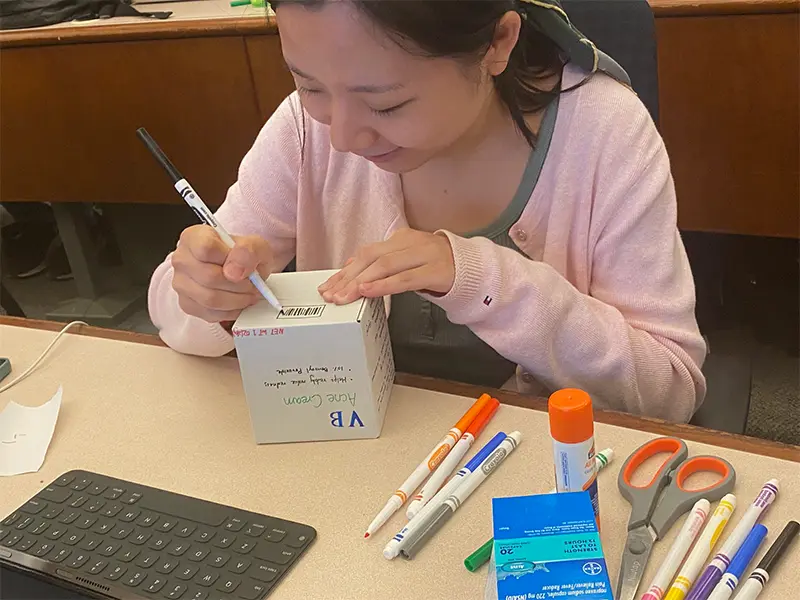
Students letter a drug carton by hand, with markers, from the labeling rules. Fitting every required fact onto a small box is an act of encoding. They find out what a label has to say, and how easily it is misread.
-
Two answers to one brief
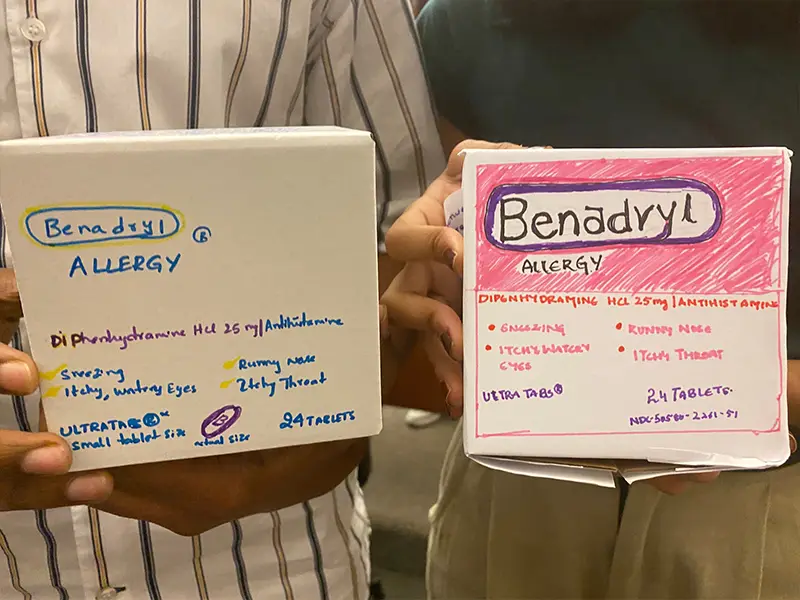
The same drug facts, encoded by two students. Holding the cartons side by side shows how much of a label is judgment, and that is where the conversation about the rules begins.
-
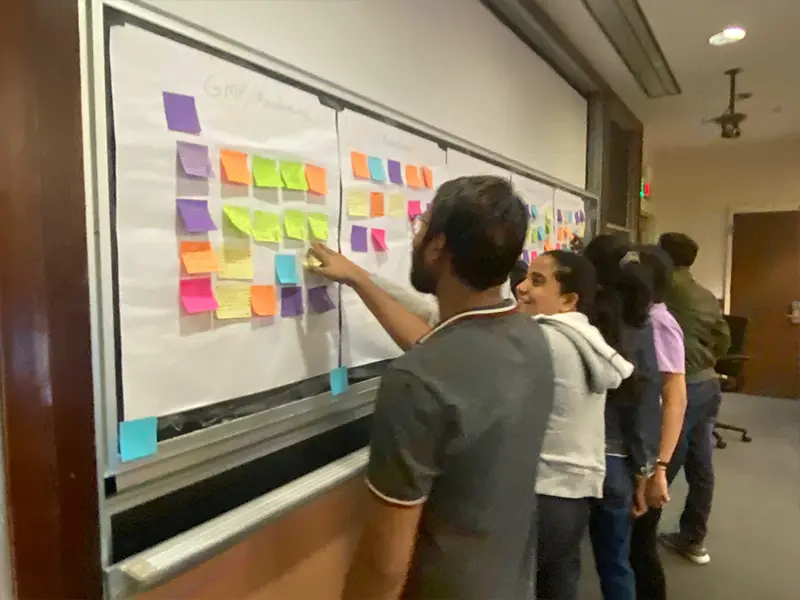
The wall of notes
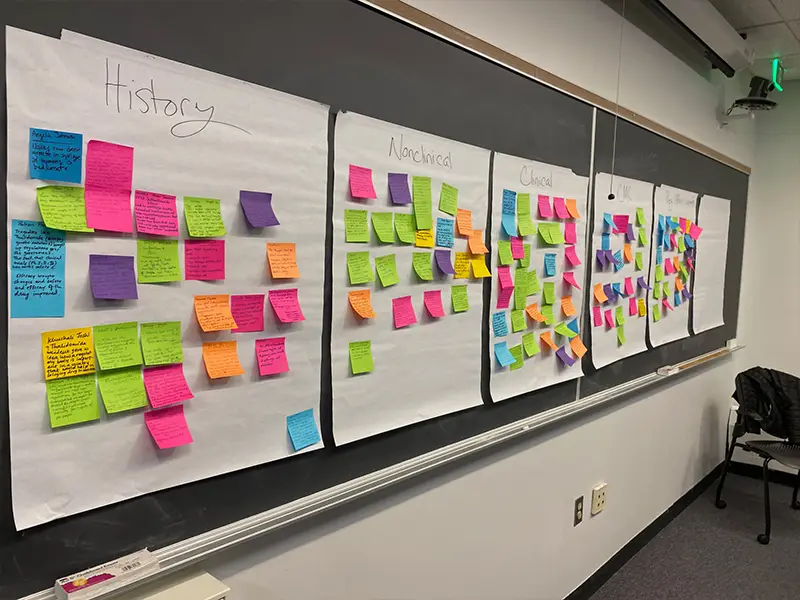
A development program, decoded. Students break a product’s story into history, nonclinical, clinical, and manufacturing, one note at a time, until the wall shows what they know and what is missing.
-
Structured debate
Then they argue it out, standing up. The debate is structured, and it belongs to the students. The learning is in the disagreement.
-
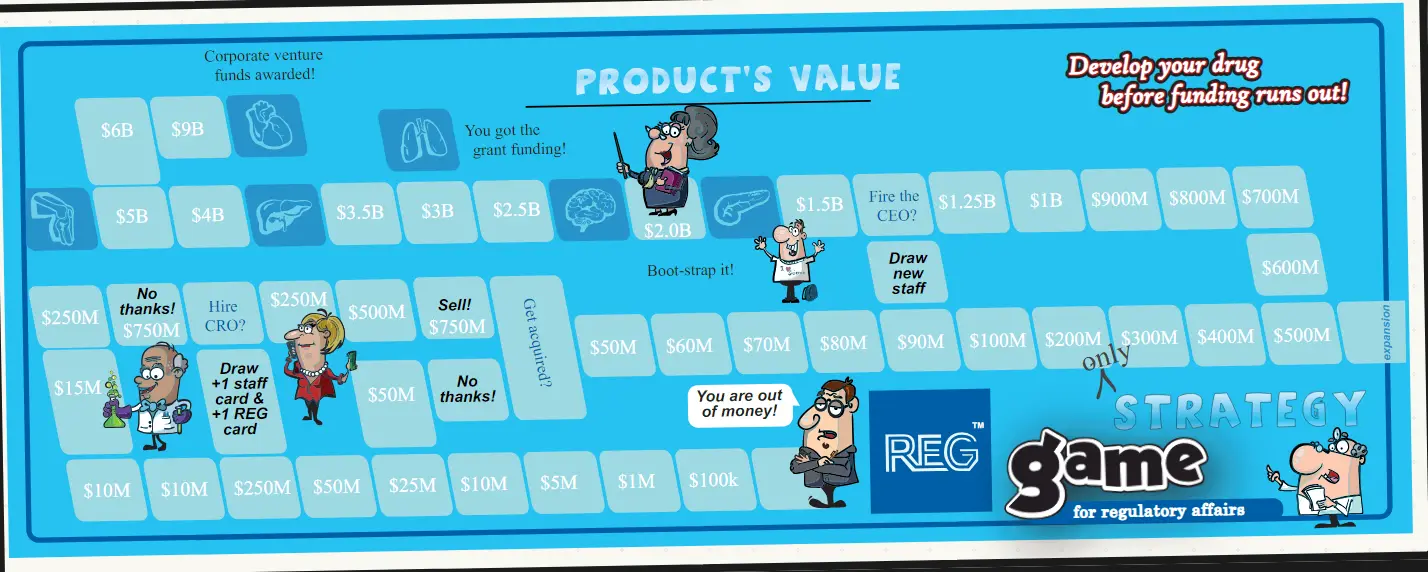
A game with real stakes
I made a board game to teach regulatory strategy, and it is now playable online as Race to Approval. Each game deals a real trial from ClinicalTrials.gov, and a drug and a device take different roads to approval.
-
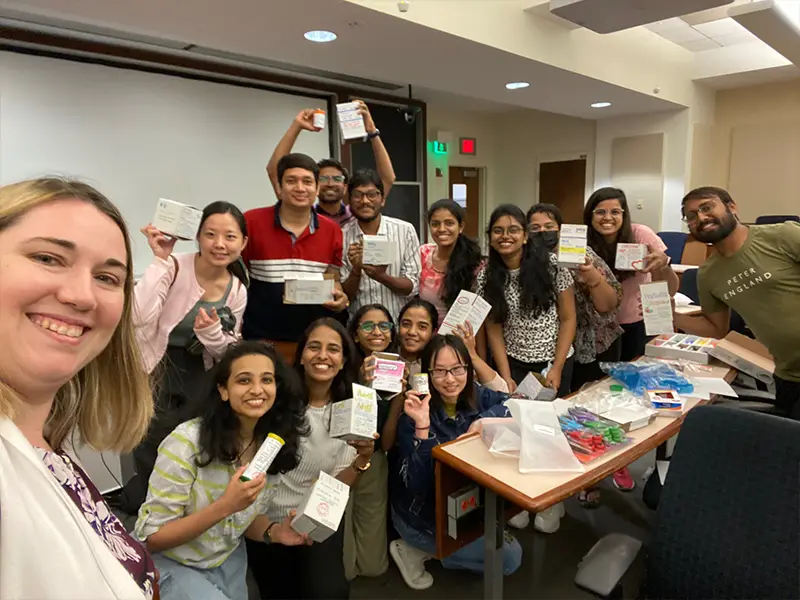
What they keep
The class with their finished cartons. People remember what they made with their hands long after they have forgotten a slide.
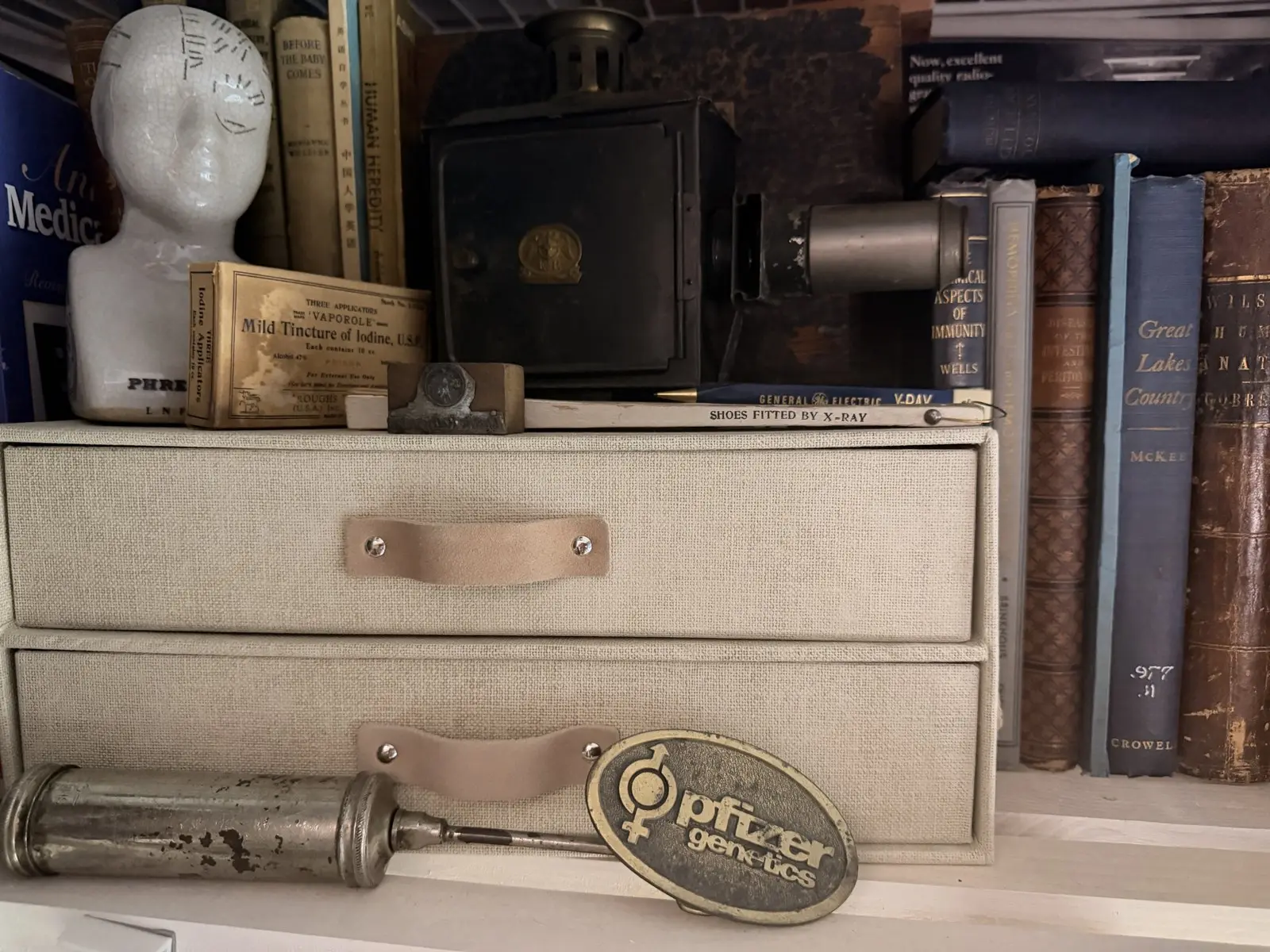
Teaching with artifacts
A working museum
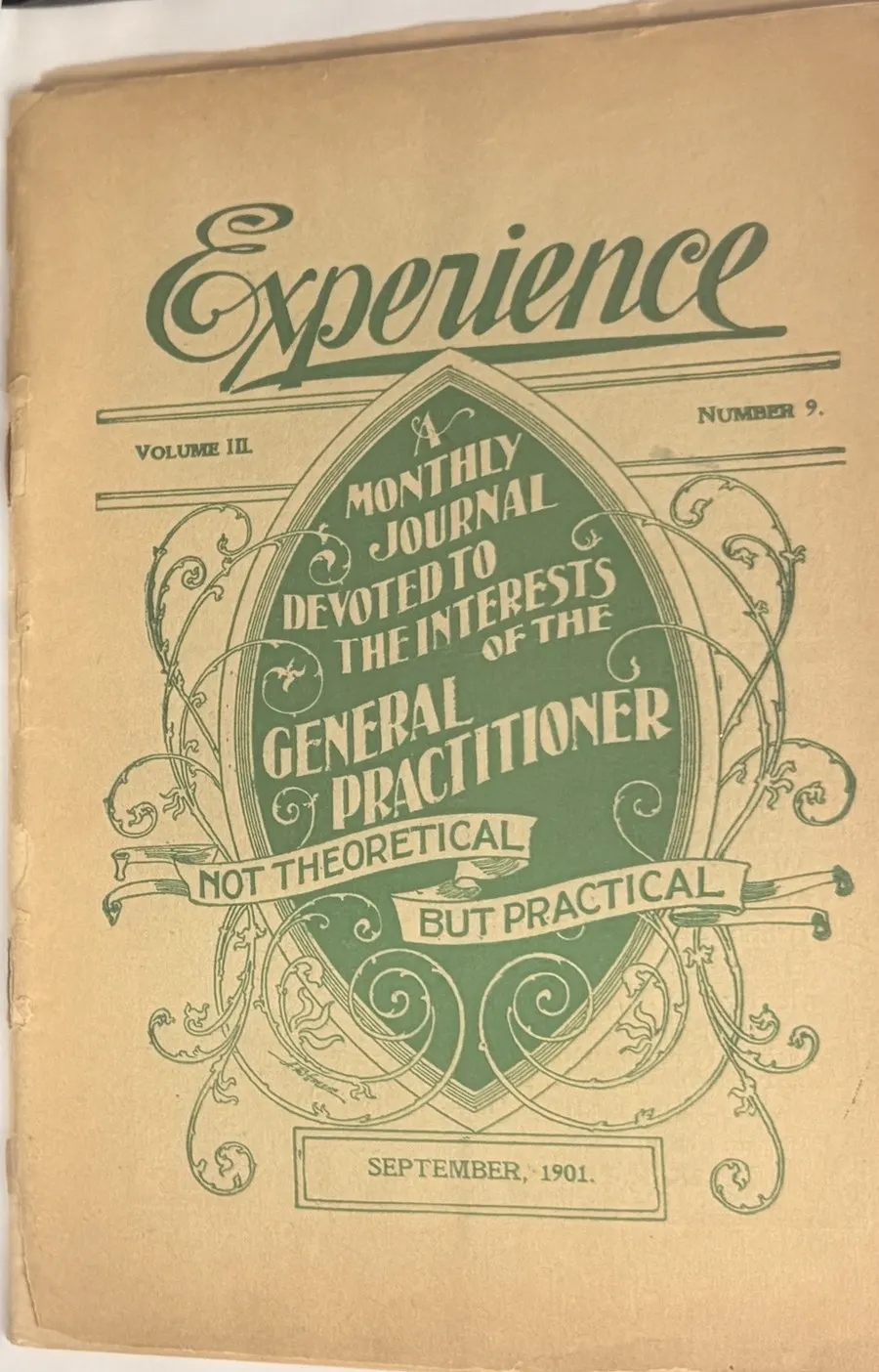
I teach with antiques. Vintage medical and computing artifacts bring the history into the room and connect students with what innovation still needs.
This shelf holds the kerosene magic lantern I roll into talks on gene therapy. The first slides go up through it, on glass, and 120 years of medicine land on one wall. Beside it sit a phrenology head, a box of tincture of iodine, and a measuring stick that reads Shoes fitted by X-ray.
-
Timed writing with AI
In place of a term paper, an FDA-facing document of dozens of pages, with figures and citations, due in an hour or less, with any AI tools students choose. I call it regulatory life skills.
-
Data, dramatized
Survey answers from professional writers, reenacted on film by volunteers, so that an audience hears research as speech. The film is called Writing Under Fire.
I teach RGA 6463, Regulatory Strategy Throughout the Lifecycle, in the Regulatory Affairs master’s program at Northeastern University.
Making it visible
Science, drawn so it can be read
My first degree is in fine arts. I still draw the science, so that people outside a field can find their way into it.
-

A journal cover
The image on this cover is mine. A scanner does not produce a labeled composite. Someone chooses the slices and arranges them so that a reader can compare six contrasts at a glance. I made the medical illustrations for the paper, which went on to win the journal’s Lucien Levy award.
-
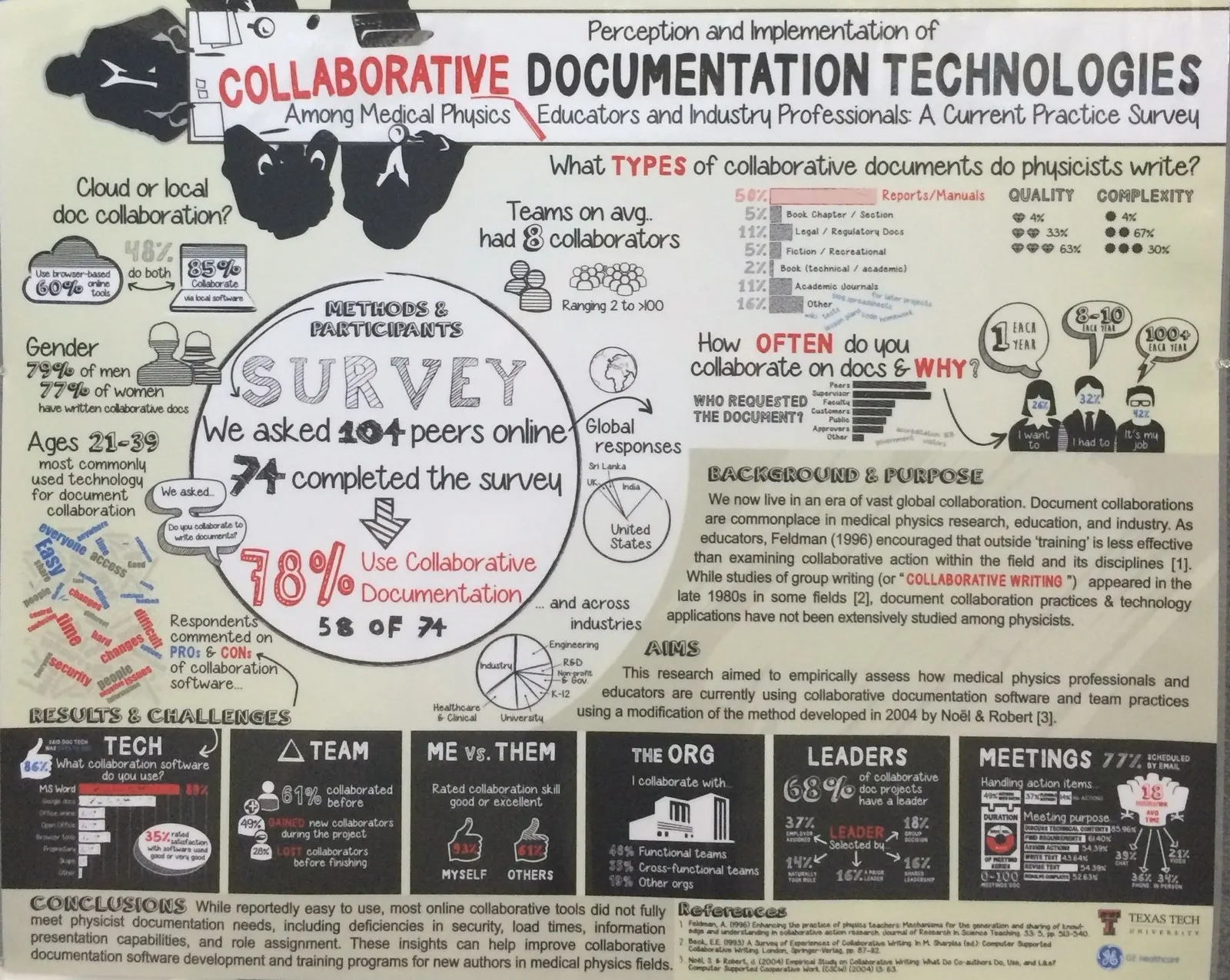
A poster anyone can read
How do medical physics educators and industry professionals write together? We asked 104 peers and 74 answered in full. I drew the results as an infographic, so that a person walking past could take them in. Published in Medical Physics in 2016.
-
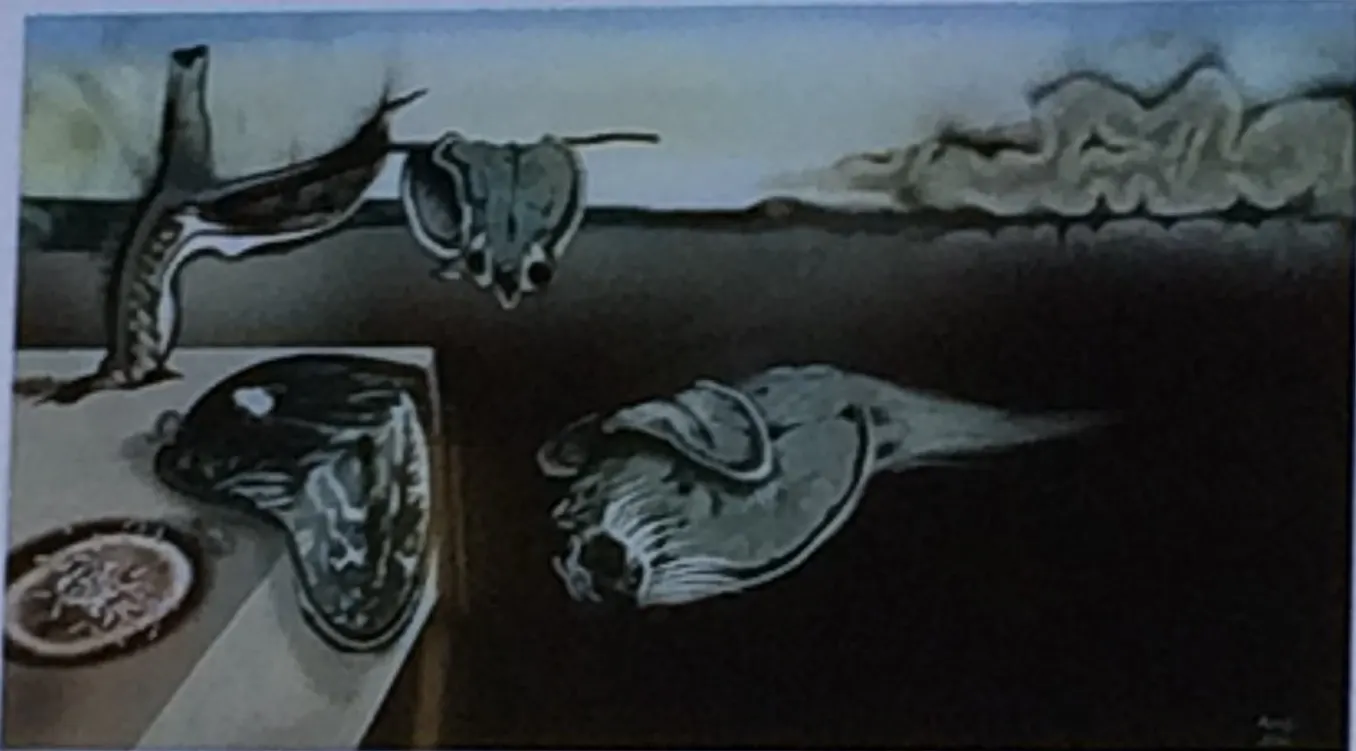
The Persistence of Radiology
After Dalí. Every part of it is brain, from synthetic MRI images that I reworked by hand. The mountain is a fold of cortex, and the dark ground is brain stretched across the frame. It was among the radiology art featured on screen at RSNA 2016.
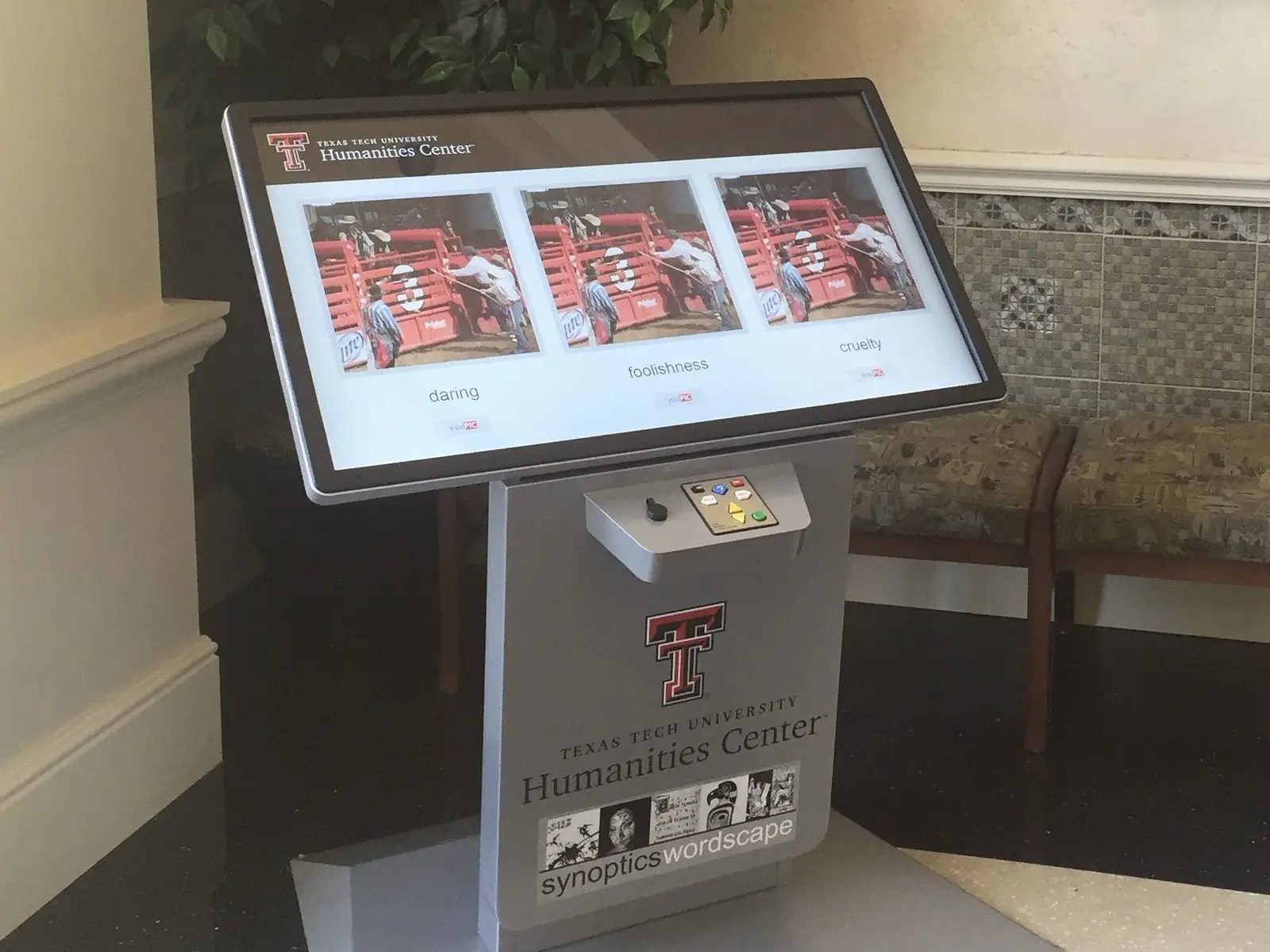
An exhibit that asks the visitor
One picture, three captions
The screen shows one photograph from a rodeo and three words under it. Daring. Foolishness. Cruelty. All three fit, and the visitor has to pick one.
This is the Synoptics Wordscape, an interactive kiosk for the Texas Tech University Humanities Center and a project I worked on. It takes an idea from the rhetoric of science and makes it something a passer-by can do with one finger. The caption a person picks says where they are standing.
Schools of thought
Whose thinking I build on
Each tile is a school, the scholars I draw on, and the position I take from it.
-
Science and technology studies
Knowledge is corrected construction
I judge a knowledge practice by how it encounters resistance, detects error, and changes in response.
Haraway
-
Rhetoric of science
Rhetoric belongs inside the account of knowledge
Writing and argument help determine which questions get asked, what counts as evidence, and what a group can decide.
Lakoff and Johnson
-
Sociology of expectations
Technological futures do causal work
Promises of benefit and scenarios of failure help organize investment, regulation, and research.
Borup, Brown and Michael, Tutton
-
Situational analysis and actor-network theory
Study the whole situation
Documents, instruments, classifications, and software change what participants can do.
Clarke, Latour
-
Epistemic justice
Patients contribute knowledge
A credible system gives patient observations a route into investigation rather than making professional status the condition for being heard.
Fricker, Mol
-
Regulatory practice
Audit the respectable claim
A polished dossier, validated workflow, or compliant document still needs a defensible link between its measurements and its conclusions.
From the work itself
-
Philosophy of mind
The observer can learn to understand
The limits of an observer’s imagination are a poor place to stop a research program.
Nagel, Goodall, Griffin
-
Personal identity
Continuity carries much of what matters
Memory, dispositions, projects, and relationships can persist to different degrees.
Parfit, Spinoza, Frankfurt
-
Ethics under uncertainty
Precaution should be proportionate
I favor explicit, revisable judgments over either automatic dismissal or an unlimited duty of protection.
Birch, Gunkel
Philosophy into method
A position has to be workable
Two examples from my dissertation, where the philosophy above became a procedure.
- Collect A survey, unstructured interviews, and the public web pages of the organizations people named.
- Open coding Each source coded separately, before any of them were combined.
- Focused coding The three pools combined and coded again, into 1,040 code groups.
- Map and theorize A social world map, and hypotheses about how large and small firms come to know policy.
Constructivist grounded theory, after Charmaz, and Glaser and Strauss. Multi-method design, after Brewer and Hunter.
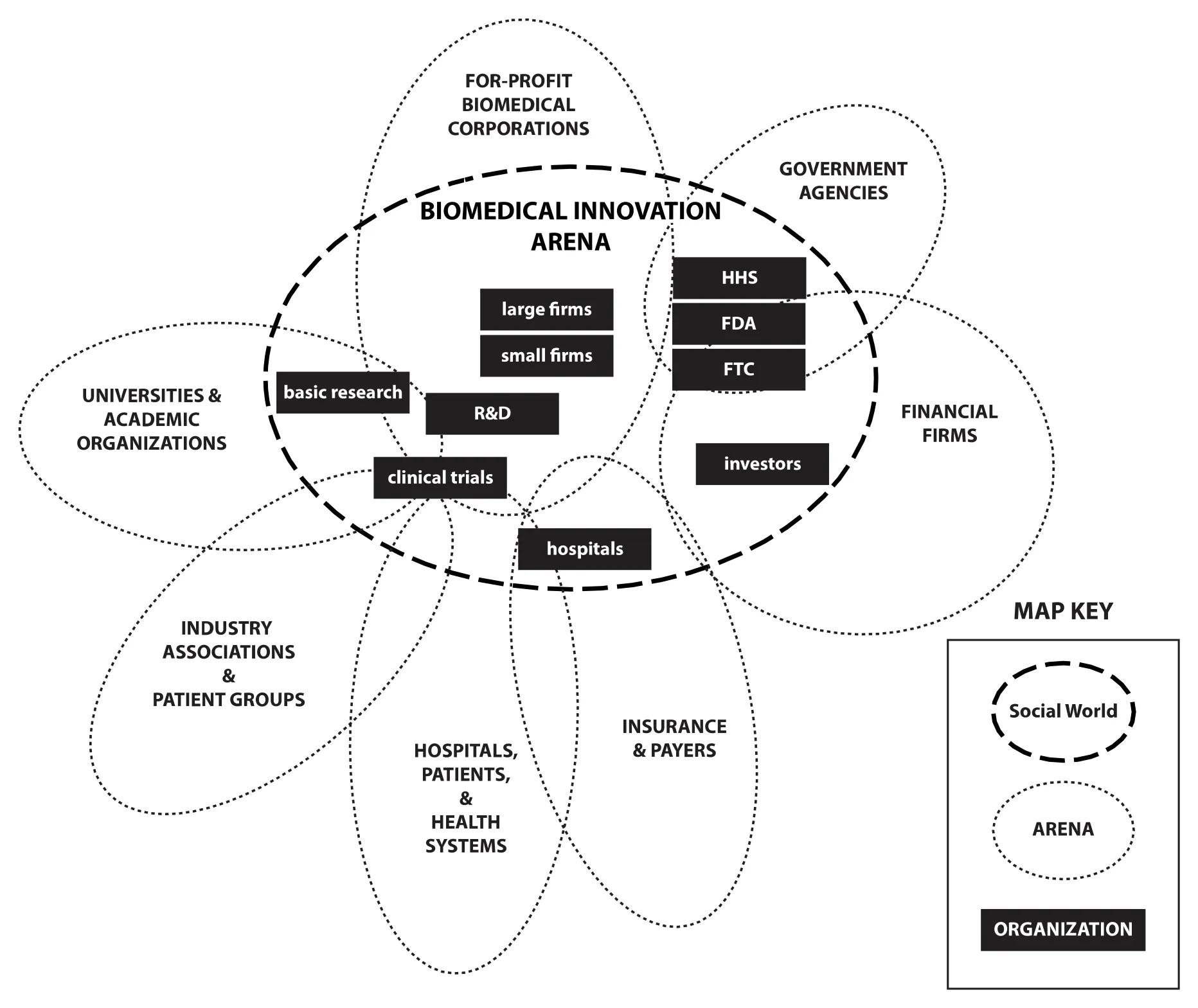
Situational analysis, after Clarke, Strauss, and Star
If knowledge is made in social worlds, the first job is to draw them. This map came out of the coding. It shows the seven arenas a new medical product has to cross, and who has to be persuaded in each.
The dissertation, in brief Metaphors in innovation What pictures really mean in biomedicine
Working papers
Manuscripts on the bench
Papers that are written and not yet placed. I share drafts on request.
- Philosophy Applying Aristotle to Generate a Contemporary Paradigm for Medical Software Use and Regulation An argument that Aristotle’s accounts of being and truth suit logic-driven medical software better than Cartesian dualism does.
- Survey Persuasive Communication and Prescribing: Physician Morality and the “Good” Drugs A survey of 75 practicing prescribers, with the Moral Foundations Questionnaire, on how morality relates to decisions about new prescription products. Presented at the American Society for Bioethics and Humanities in 2016.
- Mixed methods The Sum of Symptoms in Traumatic Brain Injury An exploratory study of 348 forum threads and 582 narratives in which patients and caregivers describe injury and recovery in their own words. Presented at the American Society for Bioethics and Humanities in 2015.
- Critical essay How mHealth Self-Diagnostic Tools Are Reinventing the Point-of-Care A critical look at patient agency once a person has identified an illness alone, with an app.
- Essay The Implication of Medical Technology as Sensory Prosthesis in Evidence-Based Medicine An essay asking whether the evidence is good enough when a disease can be seen only through instruments.
- Pedagogy Pedagogical Dramatization in Professional Writing A case study of turning survey answers from professional writers into filmed reenactments for teaching.
Documents
For a committee that reads
- PDF, 6 pages My Philosophical Views Positions I am prepared to defend on knowledge, medical evidence, nonhuman minds, identity, and care, with the sources behind them.
- Draft, PDF, 2 pages Teaching Statement How I teach, the methods I use in place of a lecture, and the reasoning behind them.
- Draft, PDF, 3 pages Research Statement What I study, how, and what comes next.
- Doctoral dissertation Policy Knowledge in Innovation Ecosystems of Global Biomedical Ventures A summary, the design, the conclusions in my own words, and the full text at Texas Tech.
- PDF, 12 pages Curriculum vitae The full record of roles, publications, talks, and service.
Get in touch
Speaking, teaching, board work, or coaching
I am glad to hear from conference organizers, journalists, students, and leaders who want a thinking partner.